
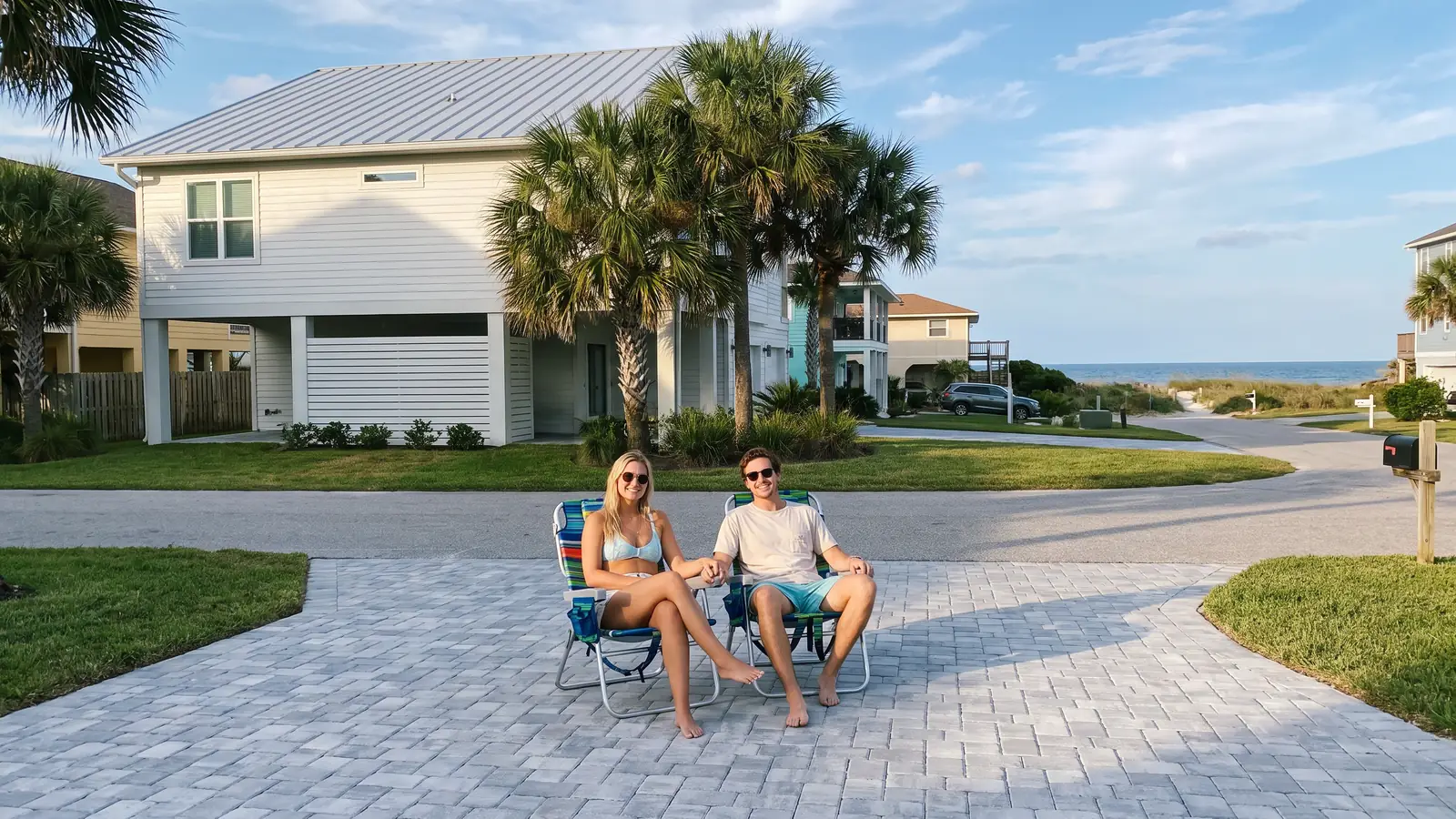
Faded, patchy or peeling pavers made even again
Paver Restoration and Resealing in Jacksonville Beach, FL
Call (904) 541-9975 for a free estimate to bring worn pavers back to an even finish.
- Brings out deeper paver color
- Fresh joint sand helps lock pavers in place
- Gives weeds less room to grow
- Makes the surface easier to keep clean
- Free estimate, no obligation
Request a Free Estimate
Free, no obligation.
Can worn pavers in Jacksonville Beach be restored, and how fast will someone reply?
Yes, a local contractor can restore and reseal worn pavers anywhere in Jacksonville Beach, FL, and you will hear back within 1 business day, usually much sooner. Driveways, pool decks, patios and walks that have faded, gone cloudy or lost their joint sand are the usual starting point. The visit is free and carries no obligation. To start, call (904) 541-9975.
Restoration is more than a fresh coat. The contractor first works out what the pavers are carrying: an old sealer that has failed, black growth, salt film or joints washed empty. Then the plan is written to match. Send a photo of the worst spot, and when you are ready, book a free estimate.
What does restoring pavers include?
A full restoration has four parts, and a job can skip the ones the pavers do not need. Knowing the parts helps you read a quote line by line. To go over them for your surface, call (904) 541-9975.
Judge the old coat
The contractor tests what is on the pavers and whether it is still bonded, since a failing coat changes the whole plan.
Strip and clean
A failed sealer is lifted off and rinsed, then the surface is cleaned and left to dry all the way.
Rebuild the joints
Old sand that holds moisture comes out, and fresh kiln dried sand is swept in and compacted.
Seal and cure
A compatible sealer goes on dry pavers in the finish you picked, then the area stays clear while it cures.
How do I know whether my pavers need stripping or only a new coat?
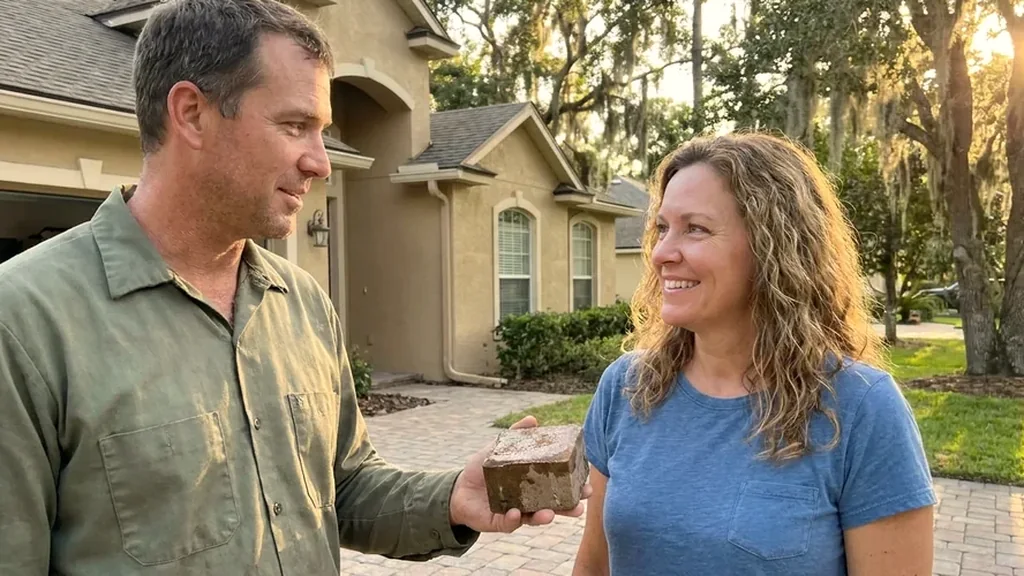
Look at the pavers in daylight, right after a rain. Stallone's Pro Wash lists the signs of a failed coat: milky patches, peeling or flaking, a yellow tint, glossy spots next to worn dull ones, and dark stains trapped underneath. Any of those means the old coat has to be dealt with first. If none show, a clean and reseal may do. To have yours judged, book a free estimate.
The same company says too many coats are a main cause of peeling, and HydroSeal says a previously sealed surface has to be checked for trapped moisture, whitening and joint loss before anything new goes on. A contractor who skips that check is guessing. To ask what the test involves, call (904) 541-9975.
Why does sealer turn white or peel on a beach property?
Moisture is the usual cause. Stallone's Pro Wash calls moisture trapped under sealer the most common reason pavers turn white or cloudy. At the beach, water gets in through sprinklers, storm rain and humid air, and Unilock says sprinklers should stay off while a new coat cures, because water can leave white marks or get sealed under the layer. To ask how a job is timed around your sprinklers, call (904) 541-9975.
Salt and sand add trouble. Safe Touch says salt leaves a white film on pavers after a blow and that beach sand sits where joint sand belongs. First Choice Exterior Cleaning says old joint sand holds moisture, which feeds algae and weeds. Clearing both before sealing is part of a restoration. For a look at your joints, book a free estimate.
How can I make my old pavers look new again?
Faded color, black growth, a cloudy coat and empty joints each have a different fix, so the first step is a diagnosis. A Jacksonville paver company lists stripping the old sealer, neutralizing the stripper, resanding the joints with sand in six colors and sealing in a natural, wet look, matte, satin or gloss finish. Another lists efflorescence treatment and repair of sunken pavers. Pick the finish by looking at a sample. To see options, book a free estimate.
HydroSeal says joint sand color changes how borders, patterns and single pavers read, with pearl giving a low contrast look and black giving more. That is a design choice worth five minutes at the visit. To raise it, call (904) 541-9975.
What does paver restoration cost in Jacksonville Beach?
Safe Touch lists paver restore at $1.75 to $3.25 per square foot on its Jacksonville Beach page and notes that sand-packed joints are common at the beach. A 2026 Jacksonville guide adds $0.75 to $1.50 per square foot to strip a failed coat, and $0.25 to $0.75 for joint sand. For a number on your pavers, book a free estimate.
| Paved area | Typical example | Restore, sand and seal | With stripping first |
|---|---|---|---|
| 400 sq ft | Courtyard or small patio | $700 to $1,300 | $1,000 to $1,900 |
| 700 sq ft | Two car driveway | $1,225 to $2,275 | $1,750 to $3,325 |
| 1,000 sq ft | Large driveway or pool deck | $1,750 to $3,250 | $2,500 to $4,750 |
| 1,500 sq ft | Driveway plus walkway and entry | $2,625 to $4,875 | $3,750 to $7,125 |
The middle column uses the $1.75 to $3.25 per square foot that Safe Touch lists as paver restore on its Jacksonville Beach page. The last column adds the $0.75 to $1.50 per square foot that a 2026 Jacksonville guide gives for stripping. A St. Augustine company lists $2.75 to $3.50 for stripping plus full restoration, and HydroSeal says resealing starts at $1.50. Repairs and leveling are quoted separately.
Size, access and condition move the price. Safe Touch says beach access and condo logistics can move a quote more than square footage does. A low bid deserves a question, since the 2026 guide says bids under $1 per square foot suggest skipped prep or thinned product. To check a pair of quotes against these pieces, call (904) 541-9975.
What is the paver restoration process from first look to final walk-through?
The process follows five steps. First Choice Exterior Cleaning runs its version over two days, so the pavers can dry before the coat goes on. To plan your days, call (904) 541-9975.
1. Inspect and test
Surface, old coat, moisture, stains, drainage and joints are looked at, and the old coat is tested.
2. Strip if needed
A stripper made for the type of sealer is applied, left to work, lifted and rinsed, then neutralized.
3. Clean and dry
Growth, salt film and dirt come off, and the pavers are given time to dry all the way.
4. Joints and repairs
Old sand is replaced, and agreed repairs to sunken or loose pavers are finished.
5. Seal and walk it
The coat goes on dry pavers. The contractor walks the finished area with you and says when cars and guests can return.
Can sunken or loose pavers be fixed before resealing?
Yes, and they should be. A Jacksonville hardscape company describes lifting the affected area, rebuilding and compacting the base, resetting the pavers in their pattern and securing the edge restraints. Sealing over a low spot only locks in the puddle. Repairs are quoted apart from restoration, so ask for both lines. To get them, book a free estimate.
Jacksonville Beach says its Urban Trails work removes paver driveway aprons and puts the pavers back afterward, and that city paver driveway standards were updated in October 2023. If your apron was touched, ask the contractor how it will be matched to the rest of the driveway. To raise it, call (904) 541-9975.
How often should restored pavers be sealed again?
HydroSeal uses three to four years as a planning range, and Belgard says to clean and reseal every three to five years. Belgard also says sealers should not go on more than once in three years, to a maximum of two applications, since too many create a film that can discolor in sunlight. Resealing earlier than needed does not help. To schedule a check, call (904) 541-9975.
When should paver restoration be scheduled around hurricane season?
A 2026 Jacksonville guide suggests fall, after hurricane season wraps up, or spring before summer humidity peaks. Unilock wants clear skies for 24 to 48 hours before sealing, temperatures from 50 to 90 degrees with 75 as the sweet spot, and up to 48 hours of dry weather afterward. A summer storm can move any date, so keep the schedule loose. To pick a window, call (904) 541-9975.
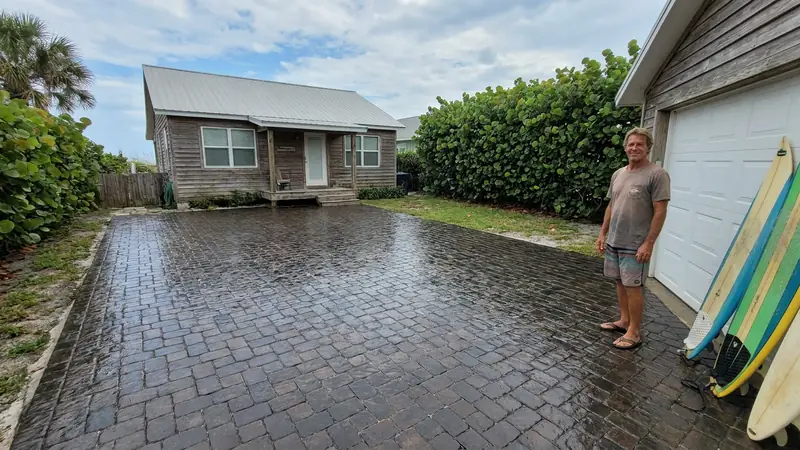
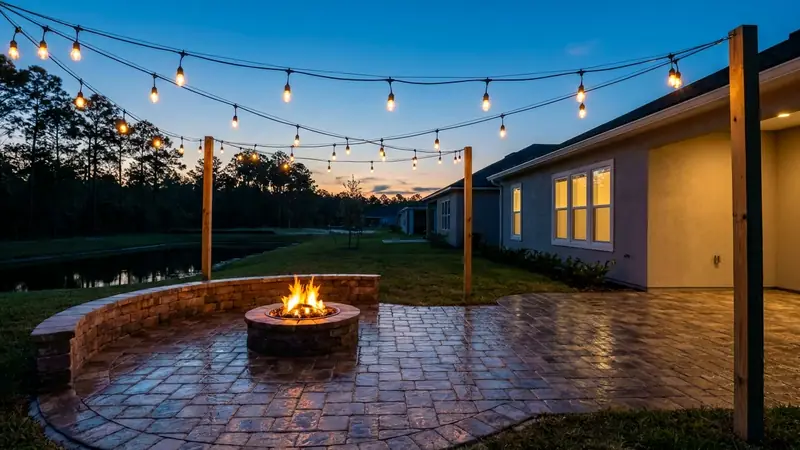
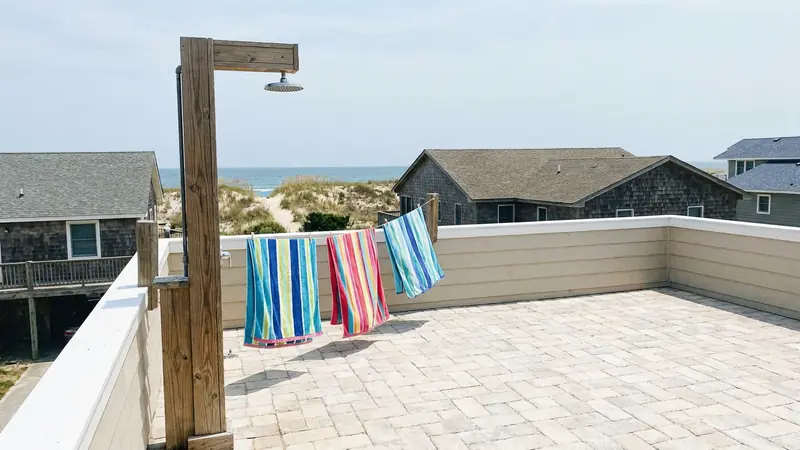
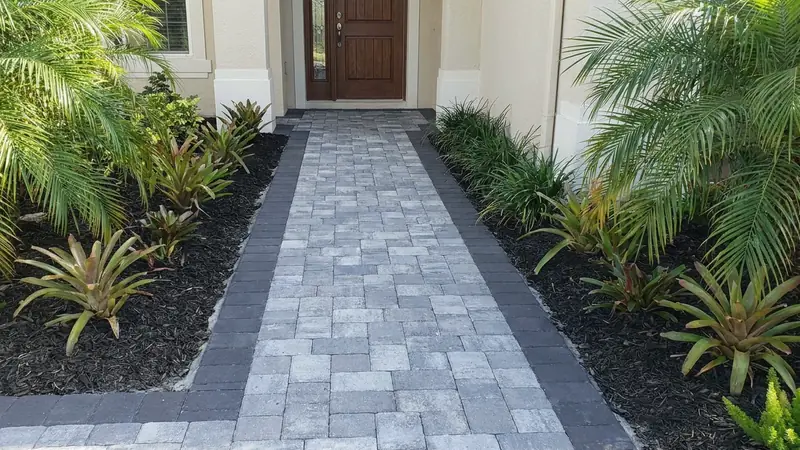
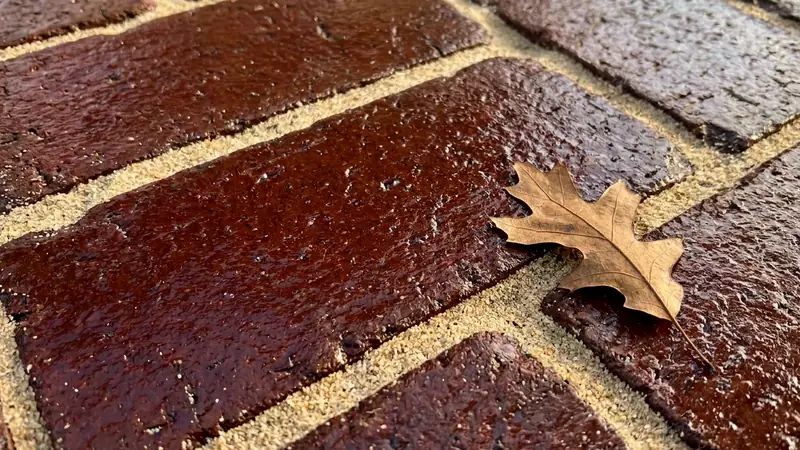
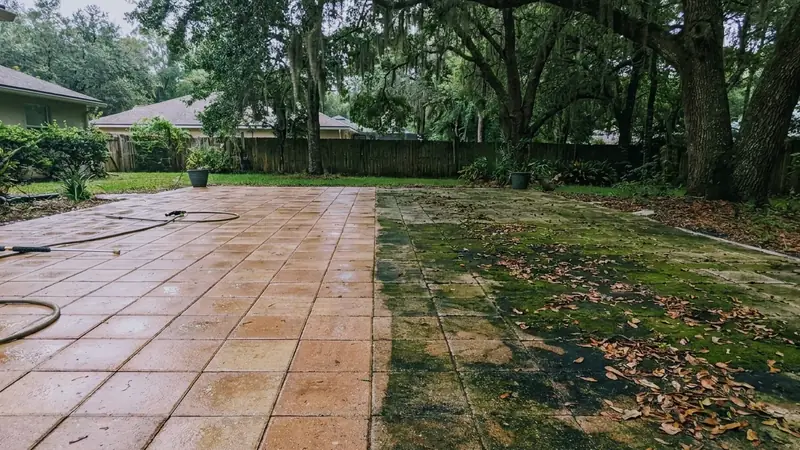
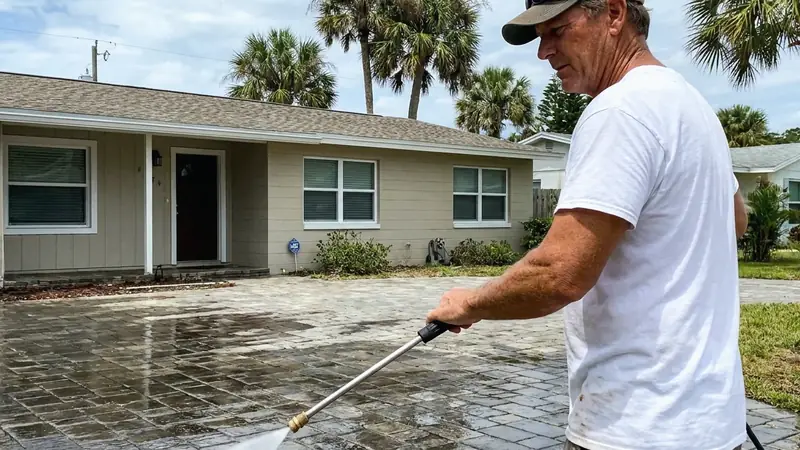
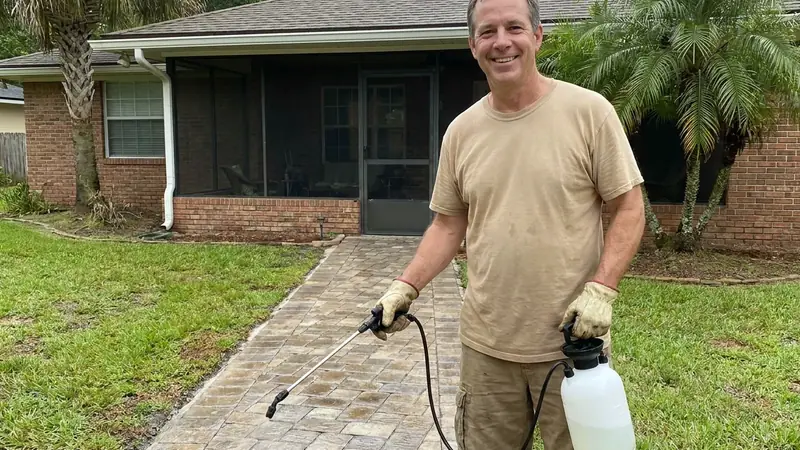
What do restored and resealed pavers look like at Jacksonville Beach homes?
Which Jacksonville Beach area towns can get a restoration estimate?
A local contractor covers Jacksonville Beach and the communities around it, east to the ocean and west across the Intracoastal Waterway and the river. Each town below has its own page. If your street is missing, call (904) 541-9975.
What do Jacksonville Beach homeowners ask about restoring pavers?
Which paver sealer works well in Florida?
That depends on the surface. Several Jacksonville companies read for this page use Trident products and match them to the job: a film-forming sealer when a wet look on concrete is wanted, and a penetrating one for natural stone or for decks where traction counts. Ask for the product name and the number of coats in writing.
Is it better to spray or roll paver sealer?
Many crews use both. A sprayer lays down an even coat and a dry roller soaks up what pools, as Unilock describes it. Either tool works when puddles are gone before the coat dries.
Why is paver sealing so expensive?
Restoration costs more because the old coat has to be judged, stripped when it has failed, and the joints rebuilt before any new coat goes on. A 2026 Jacksonville guide puts stripping at $0.75 to $1.50 per square foot and says bids under $1 per square foot suggest skipped prep.
How can I make my old pavers look new again?
Work out what is wrong first, since fading, black growth, cloudy sealer and empty joints each have a different fix. Most restorations combine a deep clean, stripping where needed, fresh joint sand and a new coat. Uneven pavers need their base fixed first.
How do I know if old sealer must be stripped?
Peeling, flaking, milky patches and a yellow tint all point to yes. A coat that is sound and still bonded can often be cleaned and refreshed. A test spot on your pavers settles it.
Can I add another coat of sealer?
Not always. HydroSeal says recoating too often builds up film and can bury an unstable layer, and Belgard says its pavers should not be sealed more than once in three years or more than twice in total. A sound coat can be cleaned and refreshed. A failing one needs to be tested and possibly stripped.
How long does restored paver work last in Jacksonville Beach?
HydroSeal uses three to four years as a planning range for professionally prepared Florida surfaces, and Belgard suggests cleaning and resealing every three to five years. Sun, traffic, sprinklers, pool chemicals and salt near the coast shorten that. A shaded walk usually outlasts an open driveway.
Does restoration include fixing sunken or loose pavers?
Only when it is written into the scope. A Jacksonville hardscape company describes lifting the affected area, rebuilding and compacting the base, resetting the pavers and securing the edges. That is repair work, and it is quoted apart from cleaning and sealing. Say so at the walk-through.
Can a paver driveway apron that the city replaced be restored with the rest of the drive?
Jacksonville Beach says that paver driveway aprons are removed for its Urban Trails paths and that the pavers are replaced afterward, and that city paver driveway standards were updated in October 2023. Ask the contractor how the apron will be matched to the rest of the surface.
When is a good time to restore pavers around hurricane season?
A 2026 Jacksonville guide suggests fall, once hurricane season wraps up, or spring before summer humidity peaks. Unilock wants clear skies for 24 to 48 hours before sealing and temperatures between 50 and 90 degrees, with 75 as the sweet spot.
What other paver services can a Jacksonville Beach home get?
Restoration sits beside cleaning, sealing and stone care. Each has its own page, so you can compare what applies. For help choosing, call (904) 541-9975.
Want those worn pavers to look even again?
Send a photo or call. A local contractor writes back within 1 business day, usually much sooner.
Free, no obligation