
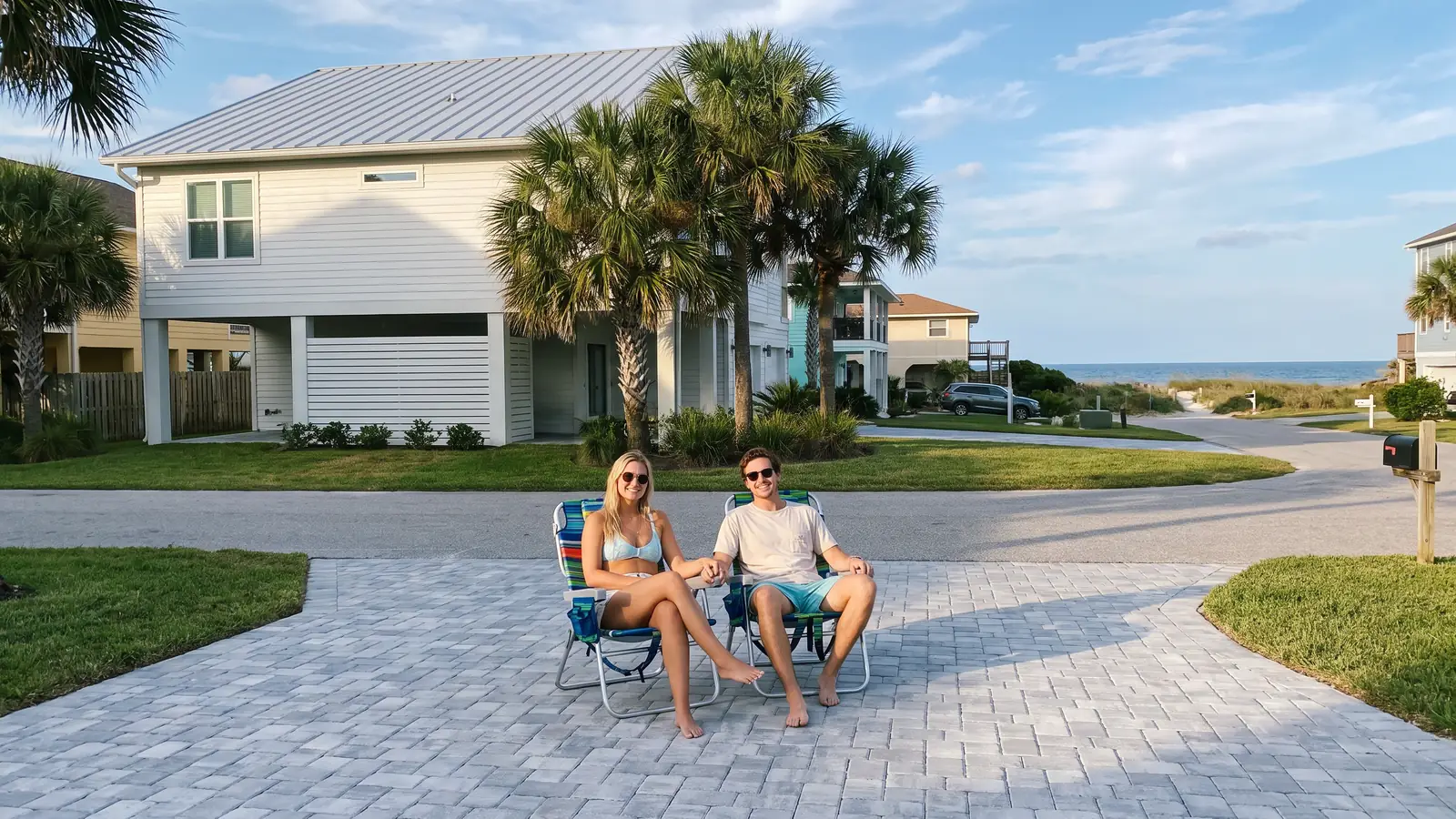
Brighter pavers with clean, freshly sanded joints
Paver Cleaning and Joint Sand in Jacksonville Beach, FL
Call (904) 541-9975 for a free estimate to clean the sand, haze and grime off your pavers.
- Brings out deeper paver color
- Fresh joint sand helps lock pavers in place
- Gives weeds less room to grow
- Makes the surface easier to keep clean
- Free estimate, no obligation
Request a Free Estimate
Free, no obligation.
Can I get my pavers cleaned in Jacksonville Beach without a long wait?
Yes, a local contractor can clean pavers anywhere in Jacksonville Beach, FL, and you will hear back within 1 business day, usually much sooner. New joint sand is part of the job, and the free estimate comes with no pressure to book. To start, call (904) 541-9975.
Cleaning lifts salt haze, mildew and dirt off the surface, so pavers look brighter and grip better underfoot. New sand goes into the joints next, steadying the pavers and crowding out weeds. The shaded side walk that has gone dark can match the rest of the yard again. Point out the worst spots when you book a free estimate.
Paver Sealing Jacksonville Beach Is Proud to Serve Northeast Florida
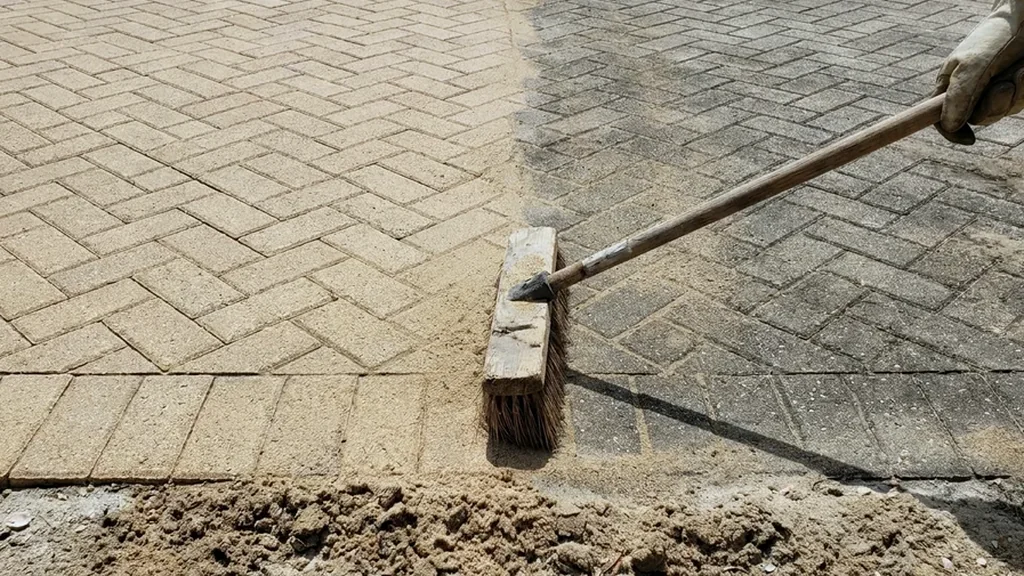
What is part of a paver cleaning job?
The job covers stain treatment, a careful wash and a fresh layer of sand after drying. You can book it by itself or as the opening stage of sealing. Shaded walks and spots near sprinklers usually take the most time. To line up a cleaning, call (904) 541-9975.
Stain treatment
A cleaner suited to the problem, whether salt haze, mildew or rust, goes on first and is tested on a small spot.
Controlled wash
A rotary surface cleaner gives an even pass without blasting the sand out of the joints.
Fresh joint sand
Dry, kiln dried sand is swept into every gap once the pavers dry, then compacted.
Sealer if you want it
A sealer coat can follow once the surface is dry. The sealing guide covers what it adds.
What are the signs my pavers need cleaning?
Look for green or black film along shaded edges, a white haze after windy weather, sand piled in the joints and weeds that keep returning. Mildew matters most on walks and pool decks, because a slick surface is a fall risk. To have yours looked at, call (904) 541-9975.
Is cleaning enough, or should I seal my pavers too?
A cleaning fixes how the pavers look today, and a sealer coat is about how long that look lasts. Stopping at a cleaning costs less now, but haze, mildew and fading return on their own schedule. Sealer afterward makes later rinses easier, though it has to be renewed every few years. Say whether you want it when you book a free estimate.
How often should pavers be cleaned in Jacksonville Beach?
Family Handyman says pavers in shady, wooded spots may need a deep clean about once a year, while sunny pavers may go a few years. Near the ocean, blown sand and salt can call for more regular rinsing in between. A shaded patio will likely need attention before an open driveway does. To plan a cleaning calendar for your property, call (904) 541-9975.
Does a harder blast clean pavers better?
No, extra force does more harm than good. Unilock, a paver maker, says improper pressure or nozzle settings can crack or erode pavers or blow out joint sand, and it advises an angle of no more than 30 degrees. Find out which pressure and nozzle the contractor will use before you book a free estimate.
Method matters as much as the machine. A rotary surface cleaner at a steady height gives an even result, and a cleaner matched to each stain does the heavy lifting. To talk through your surface, call (904) 541-9975.
What is the white film on my pavers?
Salt haze
A Jacksonville washing company says salt leaves a white haze on beach pavers after a windy event. It treats the haze with chemistry and a rinse, not a high-pressure blast. Show the contractor where it collects when you call (904) 541-9975.
Efflorescence on newer pavers
Unilock explains that efflorescence is a mineral deposit pushed to the surface when concrete gets wet and dries again and again. It is solely aesthetic, and it can fade in two to three months or up to a year. Dish soap and a stiff plastic brush can start the cleanup. If you cannot tell which film you have, book a free estimate.
Which paved areas can be cleaned at a beach home?
Every paved area can be cleaned, from the driveway and pool deck to a patio and front walk. Every area picks up its own kind of dirt, which changes the cleaner and the method. To start with yours, book a free estimate.
Driveways
Tires, oil drips and hot afternoon sun hit the driveway before anything else on the property. Cleaning here matters most along the turning path where joints loosen first.
Pool decks and lanais
Splash water, pool chemistry and bare feet wear on a deck all day. Cleaning around a pool should keep the surface from turning slick when it is wet.
Patios and outdoor showers
Beach homes often have a patio or a rinse-off area where sand and water collect. Cleaning there is about clearing the grit and keeping joints full.
Walkways and entries
A front walk collects sand tracked in from the beach, soil and drips from potted plants. Cleaning near the door changes what a visitor sees first.
What leaves Jacksonville Beach pavers dirty?
Packed sand, salt haze, storm washout, open-sun fading and failed old sealer lead the list. Cleaning handles several, and sealing or repairs handle the rest. To learn which ones fit your home, call (904) 541-9975.
1. Sand packed into the joints
A Jacksonville washing company says sand-packed joints are common at the beach and that beach sand can sit where joint sand belongs. That sand has to come out before fresh sand and sealer go in.
2. White haze after windy weather
The same company says salt leaves a white haze on pavers after a windy event. It treats the haze with chemistry and a rinse, not a high-pressure blast.
3. Joints washed out by storms
Summer storms wash sand out of joints, says a Jacksonville sealing company. Empty joints invite weeds and let pavers shift, so a cleaning visit usually ends with fresh sand.
4. Fading in open sun
A driveway without shade sits in direct sun all day long. A wash reveals how much color remains, and sealer afterward helps keep it.
5. Old sealer that has failed
Cloudy or peeling sealer cannot simply be coated over. The same company says failed sealer gets stripped first, and a Jacksonville guide prices stripping at $0.75 to $1.50 per square foot.
What does paver cleaning cost in Jacksonville Beach?
Cleaning on its own
One Jacksonville company lists paver cleaning from $0.22 per square foot, with the final price set by square footage, paver type and whether joint sand is needed. A 600 square foot driveway starts near $132, and a 1,000 square foot pool deck near $220. A 2026 Jacksonville guide puts new joint sand at another $0.25 to $0.75 per square foot. For a price on your property, book a free estimate.
Cleaning plus sealing
When sealing is also on your list, ask for a single combined price. A Jacksonville washing company publishes $1.75 to $3.25 per square foot to clean, sand and seal. To compare the two, call (904) 541-9975.
Want the surface protected too? Read about sealing your pavers, browse the areas served or return to paver sealing in Jacksonville Beach.
| Paved area | Cleaning from | Full clean, sand and seal |
|---|---|---|
| 600 sq ft | $132 | $1,050 to $1,950 |
| 1,100 sq ft | $242 | $1,925 to $3,575 |
| 1,600 sq ft | $352 | $2,800 to $5,200 |
The cleaning column applies the $0.22 per square foot starting rate listed by one Jacksonville company. The last column applies the $1.75 to $3.25 range a Jacksonville washing company published, read in November 2026. Large areas often price lower per foot, so your quote may differ.
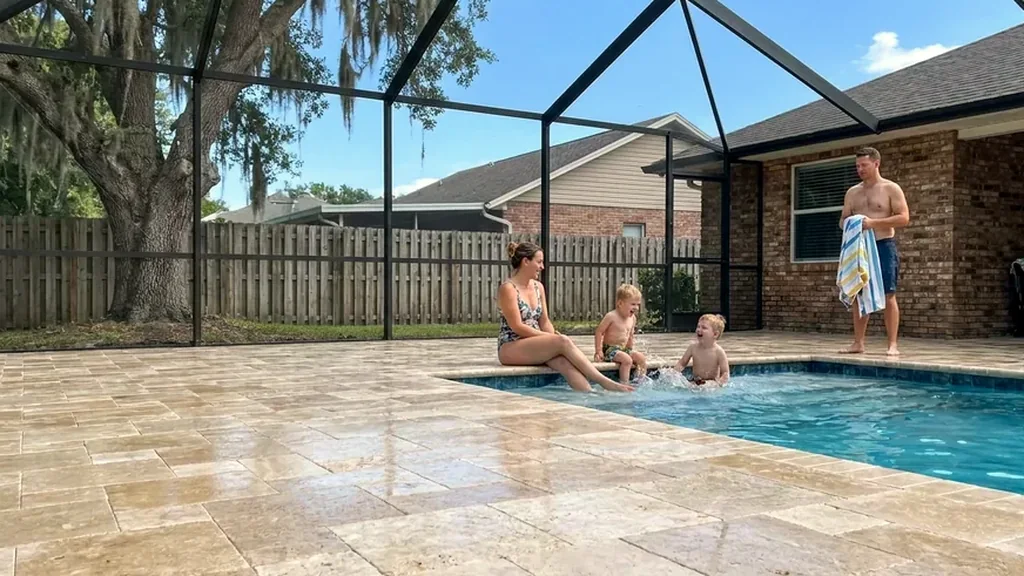
Why use a coastal contractor for paver cleaning?
A contractor who works around the beaches knows what salt, sand and damp shade leave behind. Compare any quote with the published rates on this page, then decide at your own pace. To begin, book a free estimate.
Contractors used to the coast
A company that works the beach side of Duval County already plans for salt haze, wind-blown sand and sudden storms. That gives the first visit more value.
A price with no pressure
The visit is free, and you are never required to hire anyone. If the number does not suit you, you can say no and move on.
Published rates to compare
Companies around Jacksonville publish per-square-foot rates, and this site lists them for you. A quote far above or far below them deserves a question.
Your schedule comes first
Get every number in writing, and decide when you are ready. Before you agree to anything, the contractor standards page shows what to confirm.
Want a free estimate to clean your pavers?
Use the short form or call, and a contractor writes back within 1 business day, usually much sooner.
Free, no obligation
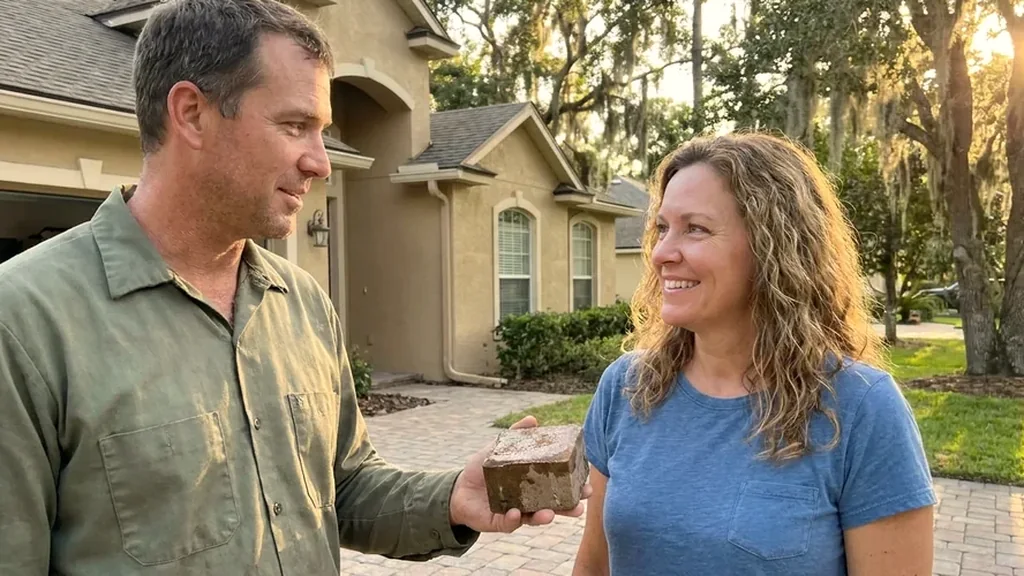
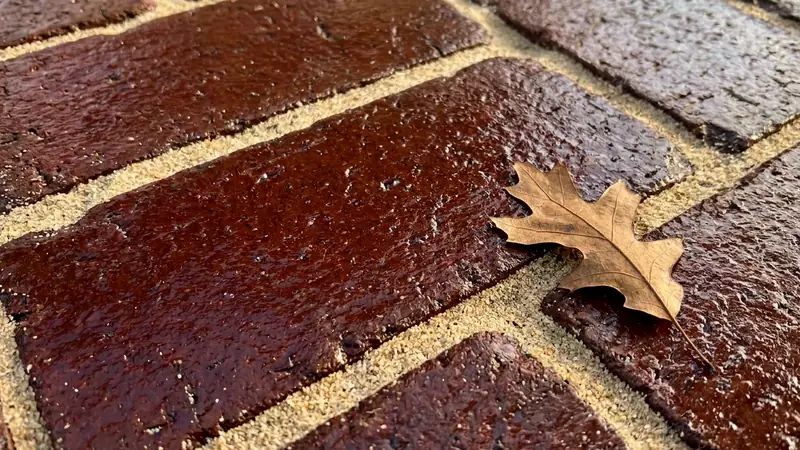
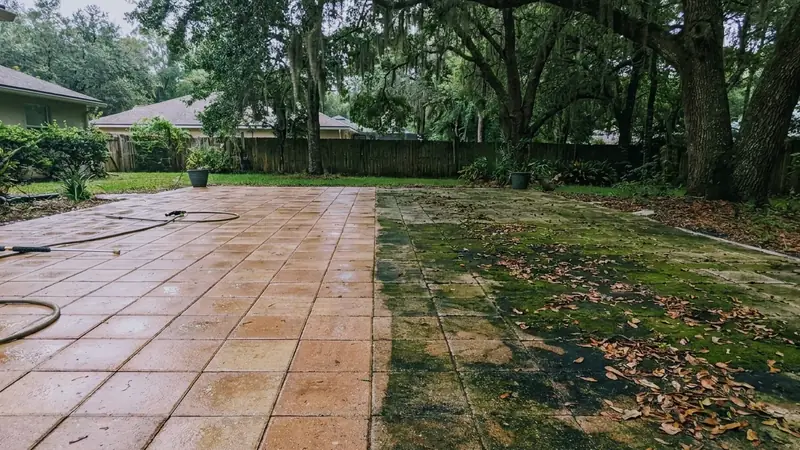
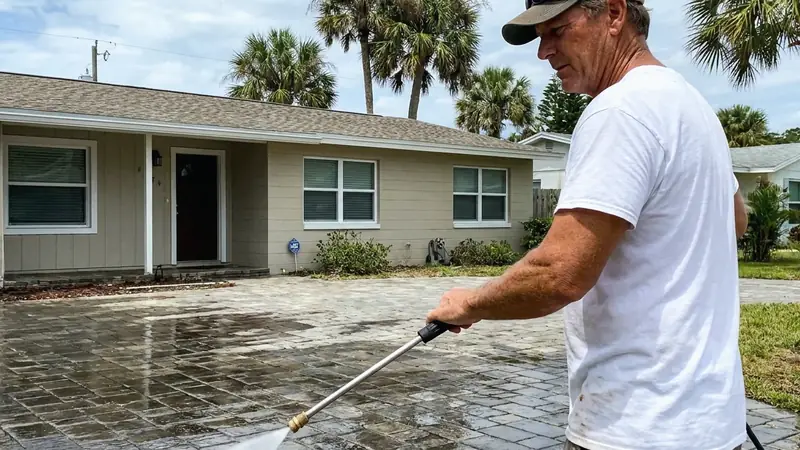
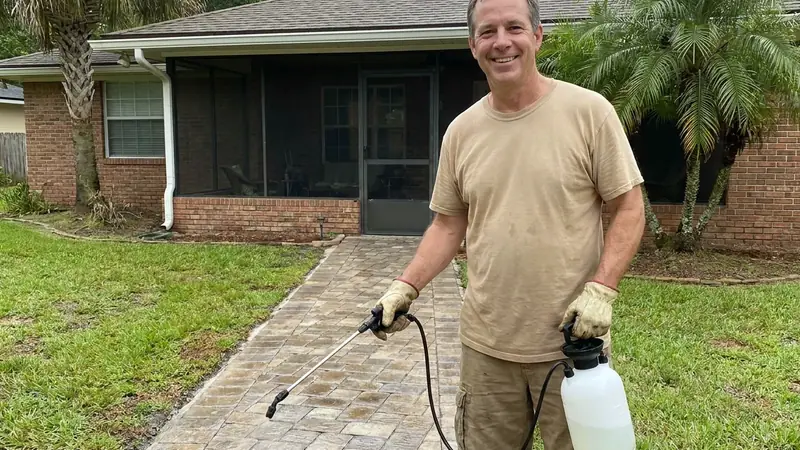
What do cleaned pavers look like at Jacksonville Beach homes?
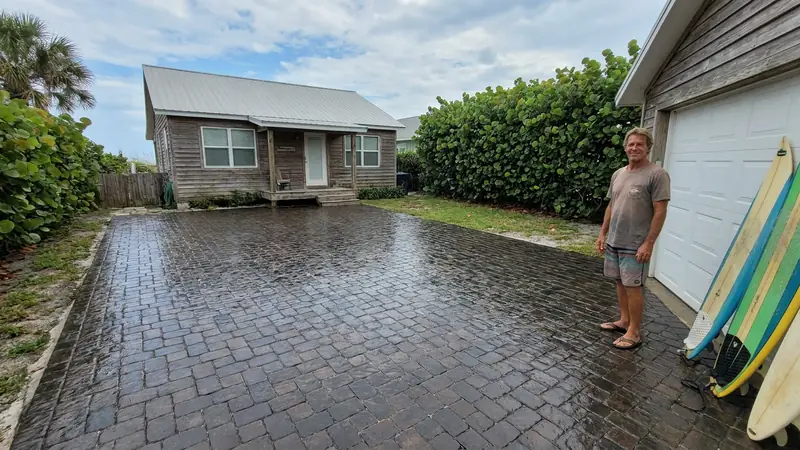
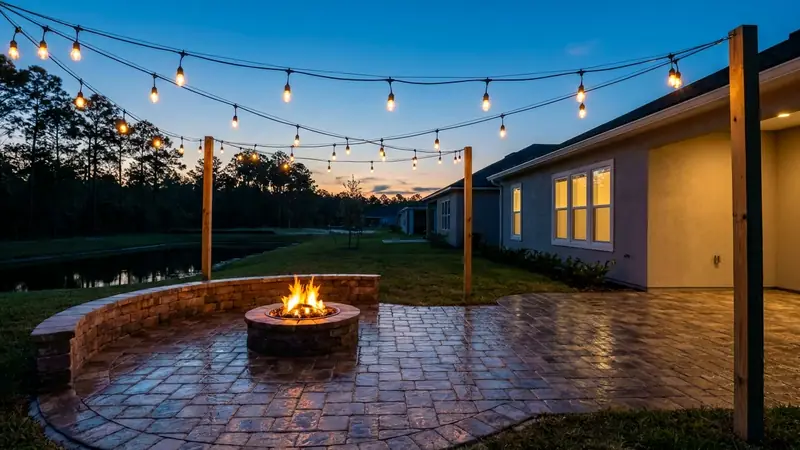
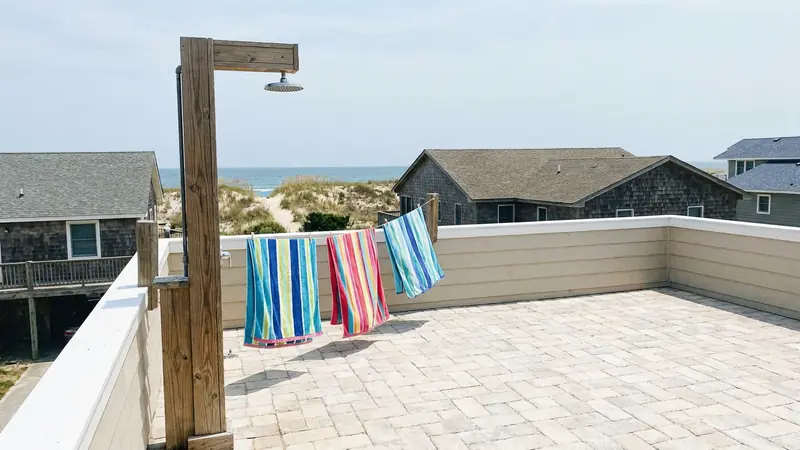
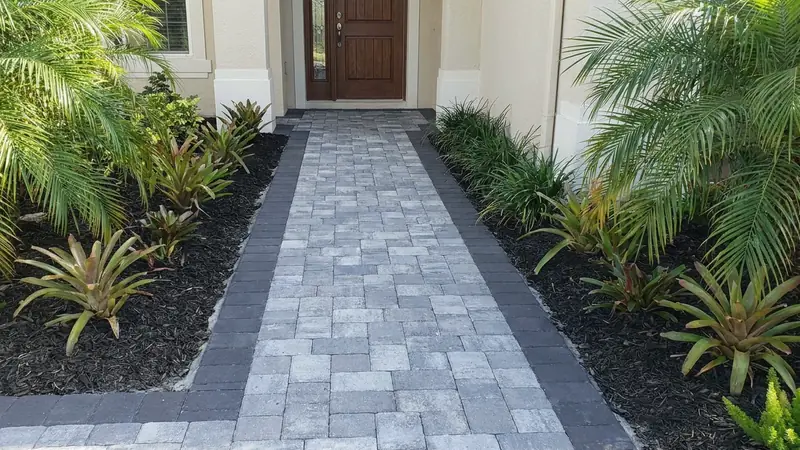
How does the paver cleaning process go, step by step?
If sealer is skipped, the visit stops after step four, when the joints are full. To set a date, call (904) 541-9975.
1. Photos and a walk-through
The contractor looks over the area and measures it for the cleaning quote. Low spots, loose pavers, old sealer and any place where water sits all get noted.
2. Protect and clean
Plants, outlets and windows are covered first. A rotary surface cleaner then washes the pavers at a pressure that leaves the joint sand in place.
3. Treat haze and stains
Salt haze, mildew and rust each get a cleaner made for that problem, tested on a small spot first.
4. Refill the joints
Once the pavers dry, kiln dried joint sand is swept in and compacted, and the extra is cleared off the surface.
5. Seal and walk it with you
When sealer is part of the job, it goes on dry pavers and standing puddles are rolled out. Last, the contractor walks the finished area with you and tells you when people and vehicles can use it again.
Frequently Asked Questions
What is the most effective way to clean patio pavers?
Start with a cleaner matched to the stain, then wash with low pressure. Unilock, a paver maker, suggests white vinegar for mildew, left to sit 10 to 15 minutes before rinsing, and low pressure on organic stains. Professionals add a rotary surface cleaner so the joints keep their sand.
What not to use to clean pavers?
Skip wire brushes and hard, steep-angle blasting. Unilock warns that wire brushes can leave metal particles that rust, and that a pressure washer should be held at no more than a 30 degree angle to avoid washing out joint material.
Is it a good idea to pressure wash pavers?
Yes, when the pressure stays low and the joints are refilled afterward. Unilock says wrong settings can crack or erode pavers or blow out the joint sand. A wash that leaves empty joints only sets up the next round of weeds.
How much should I pay for paver sealing?
A fair price around Jacksonville falls near the $1.75 to $3.25 per square foot that a washing company publishes for cleaning, sanding and sealing. A 2026 Jacksonville guide warns that bids under $1 per square foot suggest skipped prep. Compare what each quote includes before you compare the totals.
How much does paver cleaning cost in Jacksonville Beach?
One Jacksonville company lists paver cleaning from $0.22 per square foot, so a 1,100 square foot driveway starts near $242. Square footage, paver type and whether joint sand is needed set the final price. Beach access and condo logistics can matter too, says another Jacksonville company.
Will cleaning remove the white haze that salt air leaves on pavers?
Usually, if the haze is salt. A Jacksonville company says salt leaves a white haze after windy weather and that it treats it with chemistry and a rinse instead of a hard blast. Newer pavers can also show efflorescence, which Unilock says is aesthetic only and can fade over two to three months.
Should pavers be sealed after cleaning in Florida?
You do not have to, but the joints need new sand once the pavers dry. Sealer afterward helps hold that sand through summer storms and eases later rinses. The price of that protection is a repeat visit every few years.
How often should pavers be cleaned?
Family Handyman says pavers in shady, wooded spots may need a deep cleaning about once a year, while sunny ones may need it every few years. Salt and sand near the ocean may call for a rinse in between.